May 08, 2020
José Martí - Following the trail of Cuba’s National Hero in Havana
- Story
- Cuba Direct
If there is one Cuban that every visitor should get to know, it's José Martí. He dedicated much of his life to liberating Cuba from Spain, dying a martyr for the cause in 1895. The uprising he had helped organise continued, and seven years later Cuba successfully achieved independence.
Aside from his pivotal role in the independence struggles, José Martí was also a highly esteemed writer, penning a diverse range of essays, a novel and large collections of poetry. He is therefore celebrated not just for his freedom fighting activities but also for the prowess of his writing and his intellectual ideas on democracy and liberty. Despite dying over 120 years ago, his words are still frequently quoted in everyday life in Cuba, be it inspirational quotes painted on walls, or words of wisdom about life shared between friends and family.
Once you arrive in Cuba, you'll never be far from José Martí. His face can be seen on posters, billboards, statues, mural paintings, book covers and even t-shirts. If you are flying into Havana, you'll notice that the airport is named after him too. Indeed, he is so ubiquitous that it makes a great game for children to play "count how many times you spot José Martí in a day"!
José Marti Walking Tour
It's possible to take a charming walk through Old Havana and discover lots of things related to José Martí. Follow this route:
Start at Museo Casa Natal de José Martí (José Martí Birthplace Museum). This is a good place to begin as it was the house where José Martí was born. It is situated near to the train station and parts of the old city wall. A relatively humble dwelling, it has been a museum since 1925 and includes a multitude of artefacts related to Martí's life.
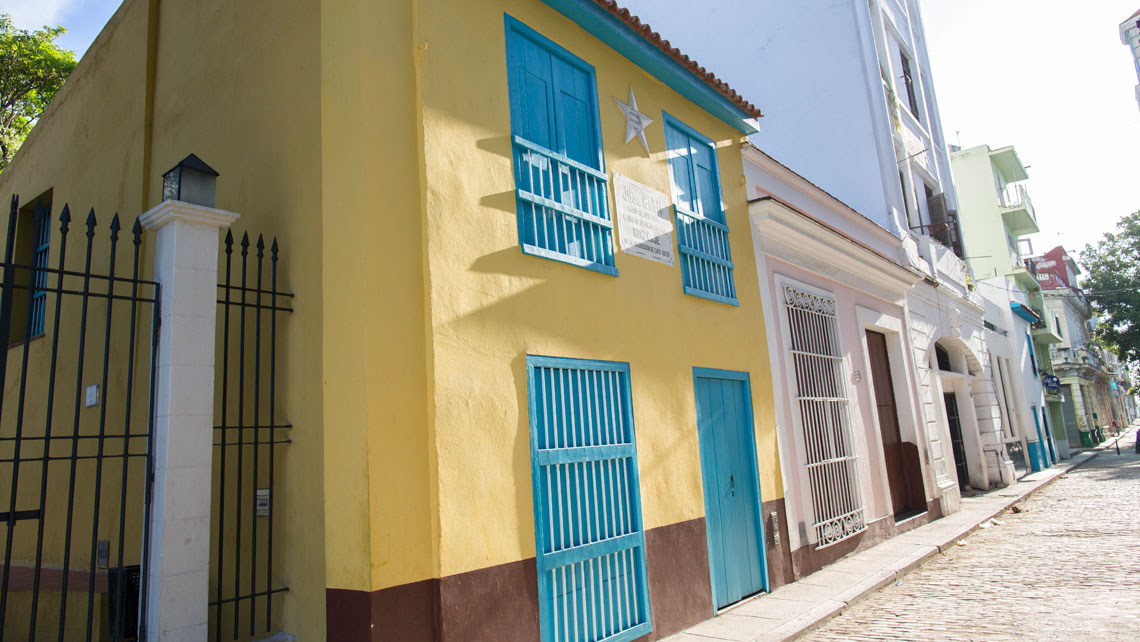
When you leave his birthplace, walk along Avenida de Bélgica for six blocks in the opposite direction of the train station. Turn left when you get to Máximo Gómez and walk one block. Note, Máximo Gómez was a key military leader in the struggle for independence, who joined forces with José Martí at the start of the Cuban War of Independence in 1895.
Turn right onto Agramonte and walk one block. When you get to the corner of Agramonte and Dragones you should see a splendid theatre in front of you. This is Teatro Martí. Built in 1884, it was renamed in homage to José Martí, in 1900, five years after his death.
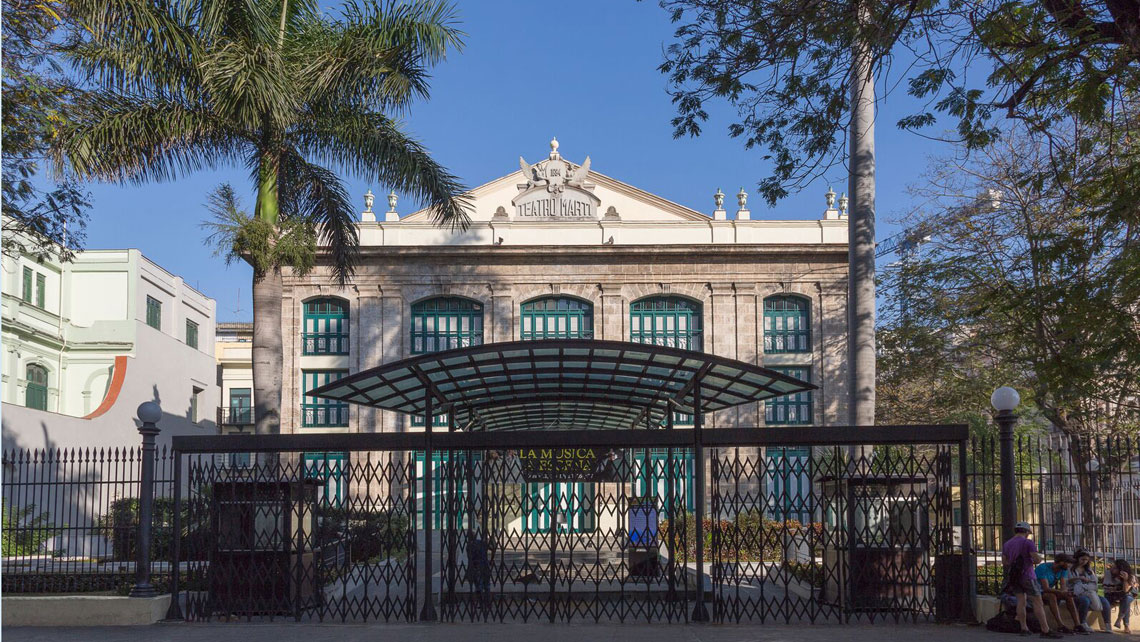
Turn left onto Dragones and walk one block until you get to the main road. This wide road is officially called Paseo de Martí, although locals tend to still call it by its old name, Paseo del Prado. You should see the enormous Capitolio building in front of you to the right. Today this building is an iconic part of the city, though it's worth noting that unlike many of the buildings you have passed so far on your walk, this was not a part of Martí's Havana, having been built in the 1920s.
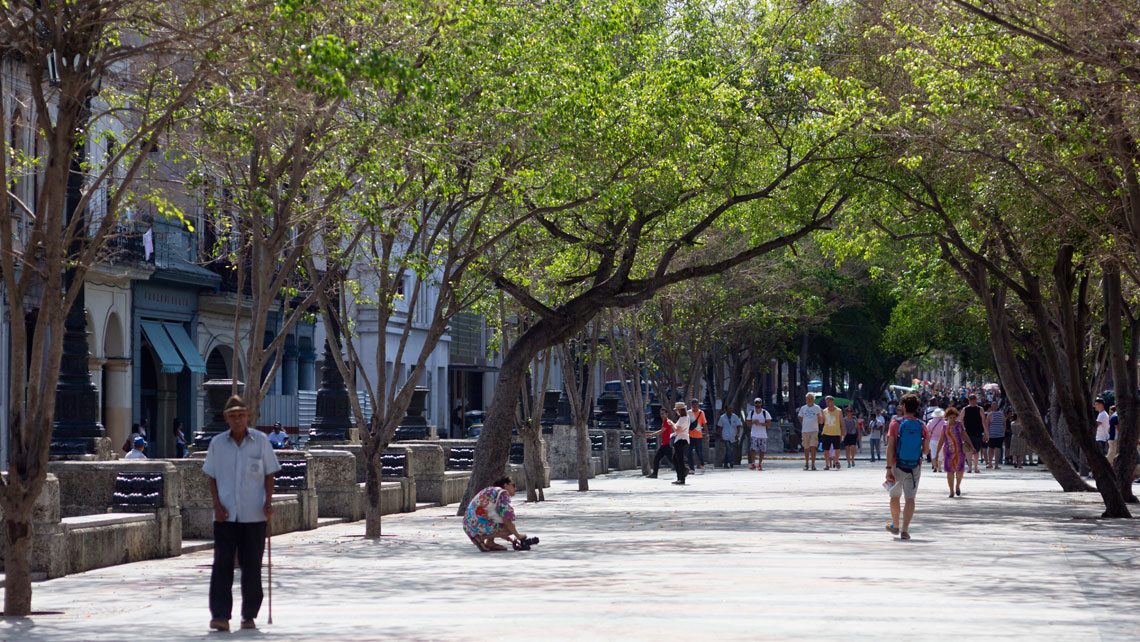
Turn right and walk along Paseo de Martí for two blocks until you get to Parque Central. This park contains a magnificent marble statue of José Martí. This was the first ever statue dedicated to him on a public site in Cuba, being erected in 1905 to mark the tenth anniversary of his death. It replaced a statue of the Spanish Queen Isabel II. Look around and you will notice the statue is surrounded by 28 palm trees. These represent the date of José Martí's birth, January 28th.
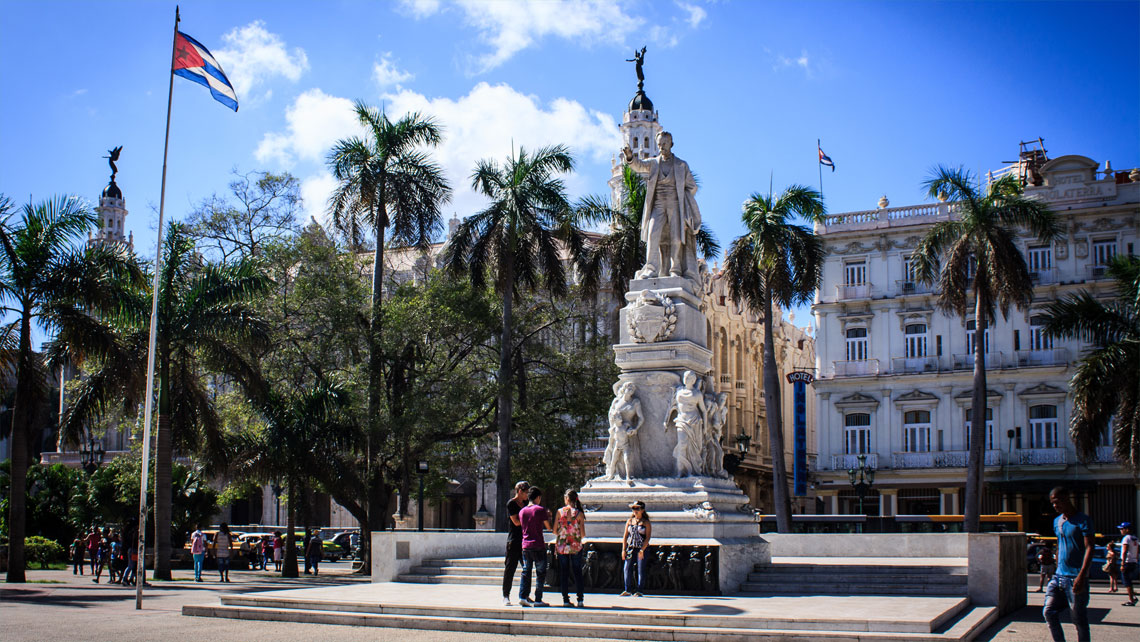
You'll also find eight pieces of stonework in the shape of coffins. These represent the eight medical students that were innocently killed by Spanish forces in 1871 during the Ten Years War. That war changed everything for José Martí. Aged just 16, it prompted him to found a newspaper, and months later he was arrested for some anti-colonial words which he had written to a friend. He was imprisoned, forced to do hard labour in chains, and eventually exiled to Spain, at the age of 18, for seven years.
From Parque Central, walk four blocks along Agramonte, in the opposite direction to the Capitolio, until you reach Colón. In front of you, to the right, is Museo de la Revolución (Revolution Museum). The grand entrance is one block further, on Refugio. Whilst this museum focuses a lot on the 1953-1959 Cuban Revolution, it also has a whole section on the Cuban Revolutionary Party that José Martí helped found, and lead, in the 19th Century. Having started your journey at Martí's birthplace, this is the perfect place to learn more about the end of Martí's life, and what happened in the struggle for independence in the years following his death. There's also a bust of José Martí on the large staircase, which still has bullet holes it from a failed attack on the president in 1957.
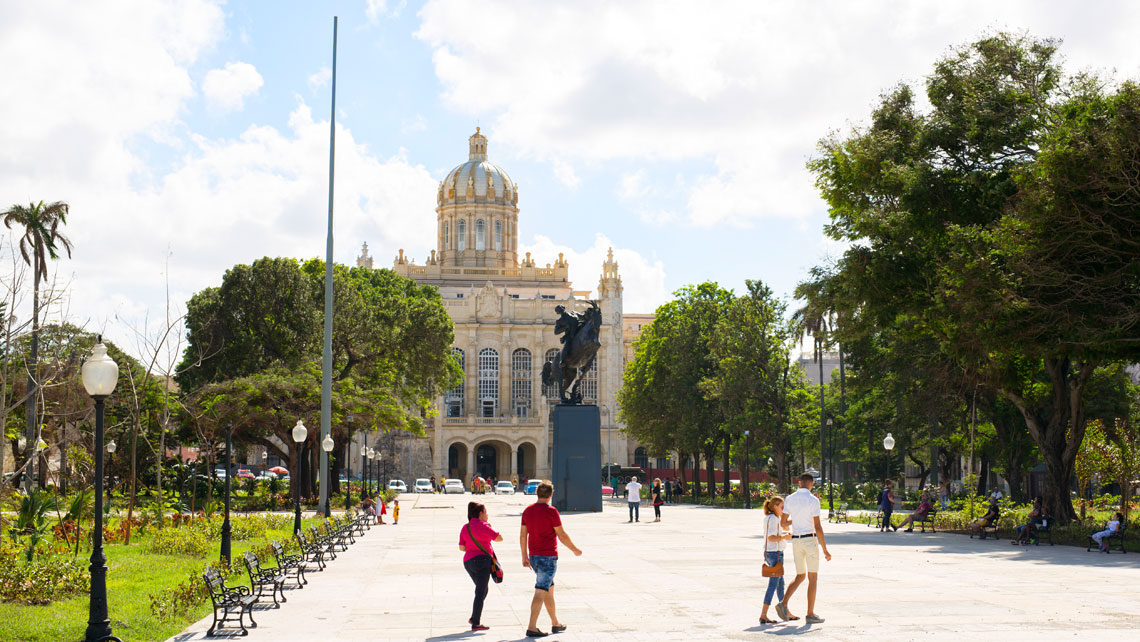
Note, whilst this walk takes in a lot of José Martí related history, this is just the beginning. A definite must-see site is Plaza de la Revolución. It is one of the world's largest public squares, and in the centre is the José Martí Memorial, which includes a 138 metre tower with a lookout, a 17 metre marble statue of José Martí and a museum dedicated to his life. And if you still want more, check out the Museo Fragua Martiana, another museum focused on José Martí that was set up on the site of the quarry where he was forced to do hard labour at the age of 16.
Another way to get to know José Martí is reading some of his works, many of which have been translated into English and are widely available. José Martí can be a useful conduit for conversation. If you are running out of things to talk about with, say, your neighbour on the plane, these quotes from José Martí could kickstart hours of chitchat:
"An insatiable appetite for glory leads to sacrifice and death, but innate instinct leads to self-preservation and life." - José Martí
"Man has to suffer. When he has no real afflictions, he invents some." - José Martí
"Happiness exists on earth, and it is won through prudent exercise of reason, knowledge of the harmony of the universe, and constant practice of generosity." - Jose Martí



Leave a comment